Mahjong Pocket: Calm Match
- 4.3
- Rating
- 50.00K
- Installs
- Free
- Price
 Analysis by App-foxy
Mahjong Pocket: Calm Match is the sort of board game I reach for when I want something quiet but still mentally active. I played it in short sessions rather than treating it like a competitive challenge, and that shaped my impression: the game works best as a small, focused puzzle break. Its large tile presentation makes the board easy to read, while the overall visual direction aims for comfort instead of spectacle. The strongest part of the experience is how clearly it understands its own mood.
This is a free board game from PlayMint, rated for Everyone, and it runs on Android devices using version 6.0 or later. It launched on March 8, 2026, and its current version is 1.0.8. The game has reached over ten thousand installs, with an average rating of 4.4 from around fifty ratings. Those numbers suggest a small but positive early audience, and after spending time with it, I can see why it appeals to players who prefer a relaxed Mahjong routine over a crowded feature list.
A quiet Mahjong board built for comfortable play
I find the appeal of this game clearest when I treat it as a small pause rather than a project to keep up with. Its uncluttered board gives me room to think, and offline access makes it practical to open in places where a connection is unreliable. That focus is a real strength, though it also sets expectations: the next question is whether the comfortable presentation makes the puzzle easier to enjoy in everyday play.
You May Also Like

 Blood Strike: 2.5 Anniversary
Blood Strike’s Loadouts Turn Every Drop Into a Tactical Gamble
A close look at Blood Strike’s custom loadouts: how fast access to signature weapons reshapes its battle royale rhythm, rewards preparation, and narrows the gap between fights.

 Pandora - Music & Podcasts
Pandora’s Music Is Easy to Start, but Harder to Recover
Pandora’s strength is its low-effort path from a seed to a station. Its weak spot is how much confidence it asks you to place in connection, setup, and quiet recovery.

 8 Ball Pool
 Is Built on Rivalries, Rematches, and Routine
A close look at the rivalries, rematches, shared routines, and unanswered safety questions that turn a quick pool match into a persistent mobile community.

 Samsung Music
’s Quiet Strength Is Playing What You Already Own
Its reach comes less from spectacle than from dependable access to a personal library. That simplicity is both the app’s strongest retention engine and its ceiling.

 AccuWeather: Weather Radar
AccuWeather Review: A Quick, Clear Forecast for Everyday Decisions
For everyday plans, the best forecast is the one you can understand quickly. AccuWeather makes rain timing, radar, and local conditions easy to act on, with a few trade-offs.

 Hill Climb Racing
Why Hill Climb Racing Still Turns Crashes Into One More Run
A tiny car, a bumpy hill and one more upgrade: Hill Climb Racing keeps resurfacing because its simple chaos makes every near-miss feel personal.
More From Our News Desk
View All News


My first impression: readable before decorative
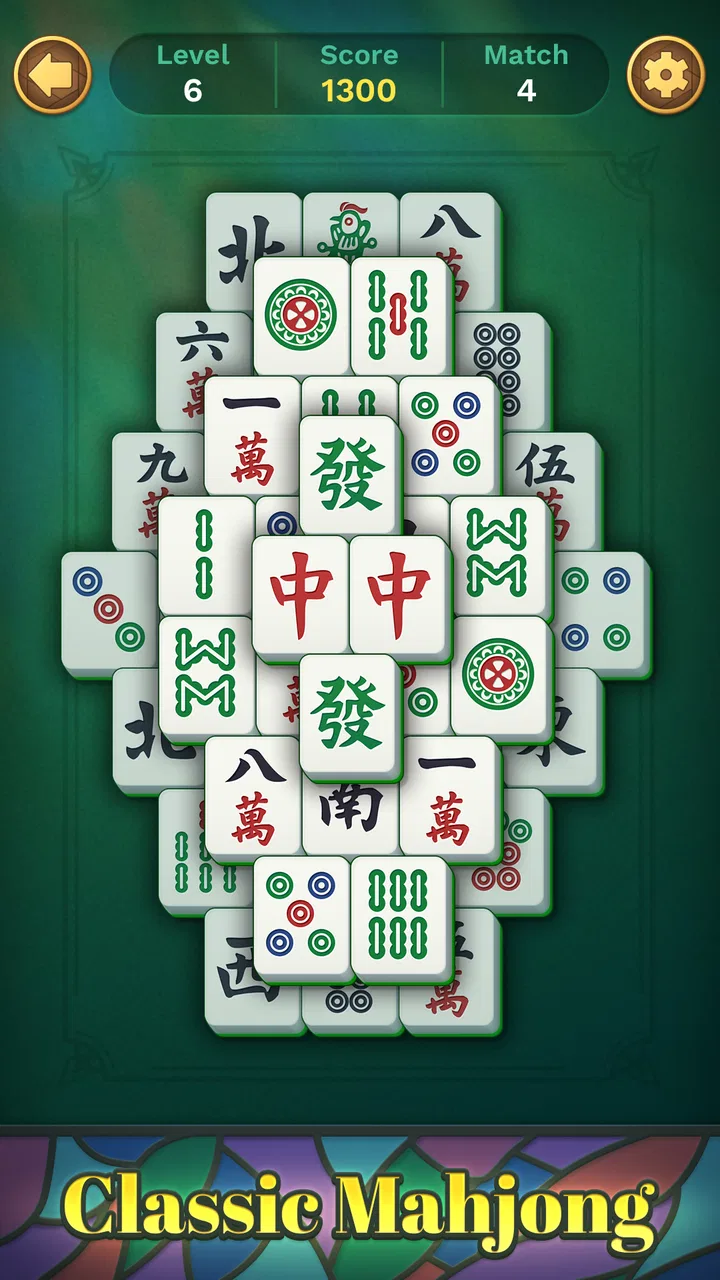
The first thing I noticed was not a dramatic theme or a complicated menu. It was the board itself. The tiles are presented at a generous size, which matters more than it may sound. Mahjong solitaire depends on recognizing symbols quickly, checking which pieces are exposed, and comparing possible matches without losing track of the layers. When the tiles are too small or visually busy, the puzzle becomes an exercise in squinting. Here, the presentation feels designed to reduce that friction.
That choice also gives the game a welcoming quality for people who do not play Mahjong often. I did not need to spend time learning an elaborate interface before making a move. The basic loop is familiar: examine the layout, find matching available tiles, remove pairs, and gradually open the board. The calm presentation leaves room for the actual decision-making, rather than competing with it.
I would not describe the opening experience as thrilling. That is intentional, but it will not suit everyone. Players looking for dramatic progression, fast reactions, or a strong competitive hook may find the first few sessions too restrained. My own response was different: I liked that the game invited me to slow down. It felt closer to solving a visual puzzle at my own pace than chasing a score under pressure.
The visual language supports the puzzle
Art direction is especially important in a tile-matching game because decoration can easily interfere with recognition. Mahjong Pocket: Calm Match keeps its visual identity close to the board. The large tiles are the main actors, and the surrounding presentation gives them enough space to remain the focus. I found that useful when I was scanning several possible moves and trying to decide which pair would reveal the most useful tiles.
The “cozy” feeling is not just a label attached to a bright color palette. It comes from restraint. The game does not appear to push the board toward a harsh arcade look, and the setting feels more like a personal pause than a noisy game room. That makes it suitable for the moments when I want to play with a cup of coffee, during a quiet evening, or while taking a short break from a more demanding task.
There is a practical trade-off here. A softer setting can make the game feel less urgent, but it can also make individual sessions blend together. If you need constant visual novelty to stay interested, the calm art direction may eventually feel limited. I think the right question is whether you want Mahjong to be the main event or a steady background activity. This game clearly chooses the second role.
Why tile size changes the way I play
The larger tile treatment affects more than comfort. It changes my decision process. I can inspect the board without immediately tapping the first matching pair I see, because the symbols remain easy to compare. That encourages a more deliberate habit: before making a move, I look for pairs that are blocking several routes and consider whether removing one tile will expose something more valuable.
This is one of the less obvious strengths of the presentation. Clear tiles help separate genuine puzzle thinking from interface management. In other Mahjong games, I sometimes spend attention confirming whether a tile is actually available or whether a small visual detail is hiding an important distinction. Here, the board feels better suited to planning several moves ahead.
My advice is to resist treating every available match as equally good. When the board offers multiple choices, take a moment to identify the pair that opens the most space or removes a tile from a crowded area. The comfortable layout makes this kind of pause easy, and it is where the game becomes more satisfying than simple visual matching.
Sound and the feeling of a session
The audio direction works best when it stays in the background. I approached the game as something I could play without needing the sound to explain every action. That fits the overall setting: the board, tile movement, and pacing carry most of the mood, while the audio helps maintain a gentle rhythm rather than trying to turn each match into an event.
For me, this makes the game flexible in everyday use. I can play with sound on when I want a more complete atmosphere, but I do not feel that the experience collapses when I keep my phone quiet. That is useful on public transport, in a waiting room, or late at night when a louder game would be distracting. The design seems comfortable with being played in small, low-attention environments.
There is a downside to this kind of subtle sound design. If you expect energetic effects, a powerful soundtrack, or a strong sense of reward after every move, the pacing may seem understated. The game does not appear to use noise as a substitute for satisfying decisions. I appreciate that choice, although I understand why some players may want more audio feedback or a stronger sense of escalation.
Offline play makes the mood more dependable
One of the most useful parts of the package is offline play. I tested the idea of using it as a dependable little puzzle for moments when I did not want to rely on a connection. That changes where the game fits into my routine. It is not only something I open at home; it also makes sense for travel, commutes, flights, or any place where connectivity is inconsistent.
Offline access also supports the atmosphere. A calm game loses some of its appeal if it constantly asks me to wait for a connection or deal with online interruptions. Being able to start a session without planning around network access keeps the experience self-contained. I can pick up the phone, solve a few layouts, and stop without feeling that I have entered a larger service ecosystem.
The trade-off is that offline play naturally favors a personal, single-player rhythm. Anyone hoping for social competition, live events, or a shared Mahjong table should look toward a different kind of game. This is a focused board experience, and I think it is better judged as one than as a replacement for online Mahjong communities.
How the mechanics fit the presentation
The core mechanics and the art direction are pulling in the same direction. Mahjong solitaire needs attention, but it does not need frantic speed. The player must identify legal matches, think about the order of removal, and avoid narrowing the board too early. The relaxed visual setting gives those decisions room to breathe, while the clear tiles keep the puzzle readable.
I especially liked the way the game supports a “look first, tap second” approach. In a rushed puzzle, I often make a move simply because it is available. Here, the slower rhythm encourages me to inspect the whole arrangement. That is where the game’s satisfaction comes from: not from rapid matching, but from seeing a route through a crowded board and opening it carefully.
A useful workflow is to begin at the top or most restrictive parts of the layout, then check which exposed pairs can unlock deeper sections. I also try to avoid removing a pair just because it is visually obvious. If another match would clear a wider area, that alternative may produce a better chain of opportunities. These are small habits, but the large tiles and calm pacing make them practical rather than theoretical.
Players new to Mahjong solitaire should know that matching identical-looking tiles is only part of the task. Availability matters. A tile generally has to be exposed in a way that lets it be selected, and the order of removal can determine whether the remaining board becomes easier or more blocked. The game’s accessible presentation makes learning this logic less intimidating, but it does not remove the need to plan.
A realistic everyday use case
My favorite way to use Mahjong Pocket: Calm Match is during a ten-minute break when I want something more engaging than scrolling but less demanding than a full game session. I can start with no preparation, examine the board, and stop after a short stretch without losing the sense that I accomplished something. It also works well at the end of the day, when a competitive game would keep me alert instead of helping me settle.
Another practical use is as a travel companion. Because the game supports offline play, I can use it when a connection is unavailable and avoid the uncertainty that comes with online-dependent titles. The board format is also naturally suited to interruptions. If I need to put the phone down, the puzzle does not require a continuous burst of reflexes or a live match that I might abandon.
That same flexibility may make it less compelling for someone who wants a long-term challenge structure. If your ideal game is built around rankings, multiplayer pressure, or a constantly changing stream of objectives, this is probably too self-contained. Its value comes from repeatable concentration, not from a large surrounding system.
Who should choose it, and who should pass
I would recommend this game to people who already enjoy Mahjong solitaire, players who want a readable board on a smaller phone, and anyone searching for a gentle offline puzzle. It is also a sensible choice for casual players who do not want to learn a complicated control scheme. The Everyone rating reinforces that approachable positioning, and the design feels comfortable for a broad audience.
I would be more cautious about recommending it to players who need a strong sense of progression. The calm identity means the game is not trying to overwhelm you with competitive systems or dramatic presentation. If your enjoyment depends on unlocking elaborate content, comparing performance with friends, or hearing constant reward effects, another board game may give you more motivation to return.
It is also not the best fit if you want traditional multiplayer Mahjong with several opponents and a full table dynamic. Mahjong solitaire and competitive Mahjong share a name and some visual language, but they offer different experiences. This game is about arranging your own decisions against a fixed puzzle structure, not reading opponents or managing a shared round.
How it compares with familiar alternatives
Compared with a typical Mahjong solitaire app, this one stands out through presentation rather than a radical mechanical twist. Many alternatives focus on packed menus, bright themes, daily challenges, or a large collection of modes. Mahjong Pocket: Calm Match takes a narrower path. Its big tiles, quiet setting, and offline availability make it feel more like a reliable puzzle notebook than a broad game hub.
That focus is a strength when you want low friction. I do not open it expecting to manage a profile, compete with a leaderboard, or keep up with a changing event schedule. I open it to solve a board. On the other hand, a more feature-heavy alternative may be better if visual variety and long-term goals are what keep you playing.
Compared with real-world Mahjong sets, the digital version removes setup, storage, and the need for other players. That makes it much easier to use spontaneously, but it also removes the tactile pleasure of handling physical tiles and the social character of sitting around a table. I see the app as a convenient solo interpretation, not a substitute for every form of Mahjong.
Its free price makes trying that interpretation easy. I can recommend giving it a fair session without asking you to commit money first. Still, free does not automatically mean ideal for every player. The real value depends on whether the restrained format matches your habits. If you want a quiet board available at any time, it has a clear purpose; if you want a broad entertainment package, its simplicity may feel too narrow.
Small habits that improve the experience
I found three habits particularly useful. First, I scan the board before touching anything, noting pairs that are exposed and pairs that are likely to become available after one removal. This prevents the first obvious match from dictating the whole session. Second, I prioritize moves that open space rather than merely reducing the tile count. A pair that reveals several future options can be more valuable than a pair that looks easy.
Third, I use the calm pacing as permission to pause after every important move. That sounds simple, but it prevents accidental taps and makes the puzzle feel more intentional. The large tiles support this approach because I can return to the board and re-evaluate without struggling to read it.
A fourth habit is to play it in the setting it was designed for. I get more from the game when I treat it as a short reset rather than forcing a long session. If I am tired, I play slowly. If I am distracted, I stop rather than turning the puzzle into a frustrating test of attention. The game’s atmosphere works best when I cooperate with it.
Version, accessibility, and practical expectations
The current version is 1.0.8, and the minimum operating system is Android 6.0. That gives the game a relatively broad device range, which is helpful if you use an older phone rather than a recent flagship. The large-tile approach should also be appreciated by anyone who finds dense puzzle interfaces tiring, although comfort will still depend on the individual screen and display settings.
Because it is free and rated Everyone, the game is easy to position as a low-commitment option for a household or a casual player. I would still suggest checking how the board feels on your particular phone before deciding whether it will become a regular habit. Tile size is a major part of the experience, and what feels spacious on one display may feel more crowded on another.
The early audience is modest but favorable, with a 4.4 average from roughly fifty ratings and seven written reviews. I treat that as an encouraging signal rather than proof that it will satisfy every Mahjong fan. The game’s appeal is specific: it is strongest when clarity, quiet pacing, and offline convenience matter more than variety or competition.
My atmosphere verdict
After playing it, I think Mahjong Pocket: Calm Match succeeds because its parts agree with one another. The large tiles make the board approachable, the cozy visual direction keeps attention from feeling strained, the restrained sound supports rather than interrupts, and offline play lets the experience remain private and dependable. None of these choices would be enough on its own, but together they create a coherent mood around the basic Mahjong solitaire loop.
The limitations are equally clear. This is not the game I would choose for multiplayer tension, elaborate progression, or constant novelty. Its gentle rhythm can feel too quiet if I am in the mood for a more energetic board game. Some players will also prefer an alternative with more modes or stronger competitive incentives.
For my own routine, though, the focused design is the reason I would keep it installed. I can use it during a short break, play without a connection, and concentrate on the board without fighting the interface. If you want Mahjong as a calm, readable solo ritual rather than a feature-packed competition, this is an easy free game to recommend.
FAQs for Mahjong Pocket: Calm Match
01What is Mahjong Pocket: Calm Match, and how does it differ from traditional Mahjong games?
Mahjong Pocket: Calm Match is a mobile adaptation of the classic Mahjong game with a focus on relaxation and mindfulness. Unlike traditional Mahjong, which typically involves four players and complex rules, this app offers a single-player experience with simplified gameplay. Players match tiles to clear the board, designed to be soothing and enjoyable for all ages.
02Is Mahjong Pocket: Calm Match suitable for beginners?
Yes, Mahjong Pocket: Calm Match is ideal for beginners. The app provides a user-friendly interface with intuitive controls, making it easy to pick up and play. Additionally, it offers helpful tutorials and hints to guide new players through the basics, ensuring a smooth learning curve without overwhelming them.
03Are there any in-app purchases or ads in Mahjong Pocket: Calm Match?
Mahjong Pocket: Calm Match is free to download, but it does include optional in-app purchases. These purchases may provide access to premium features, such as additional tile sets or themes. The app also displays ads, but they are strategically placed to avoid disrupting gameplay and maintain a calming experience.
04What features make Mahjong Pocket: Calm Match a relaxing experience?
The game is designed with relaxation in mind, featuring calming background music, gentle sound effects, and visually soothing graphics. Players can choose from various themes and tile sets to personalize their experience. The game also includes a zen mode, allowing users to play without time limits, promoting a stress-free environment.
05Does Mahjong Pocket: Calm Match require an internet connection to play?
No, Mahjong Pocket: Calm Match does not require an internet connection for core gameplay. Players can enjoy the game offline, making it a perfect option for unwinding during travel or in areas with limited connectivity. However, an internet connection may be needed for accessing certain features, such as updates or in-app purchases.
Pros
- Intuitive controls make gameplay easy.
- Vibrant graphics enhance user experience.
- Wide variety of levels keeps it engaging.
- Offline mode available for convenience.
- Regular updates ensure fresh content.
Cons
- In-app purchases can be pricey.
- Ads may disrupt gameplay experience.
- Limited theme customization options.
- Some levels feel repetitively similar.
- Requires significant storage space.

Mahjong Pocket: Calm Match
Gallery